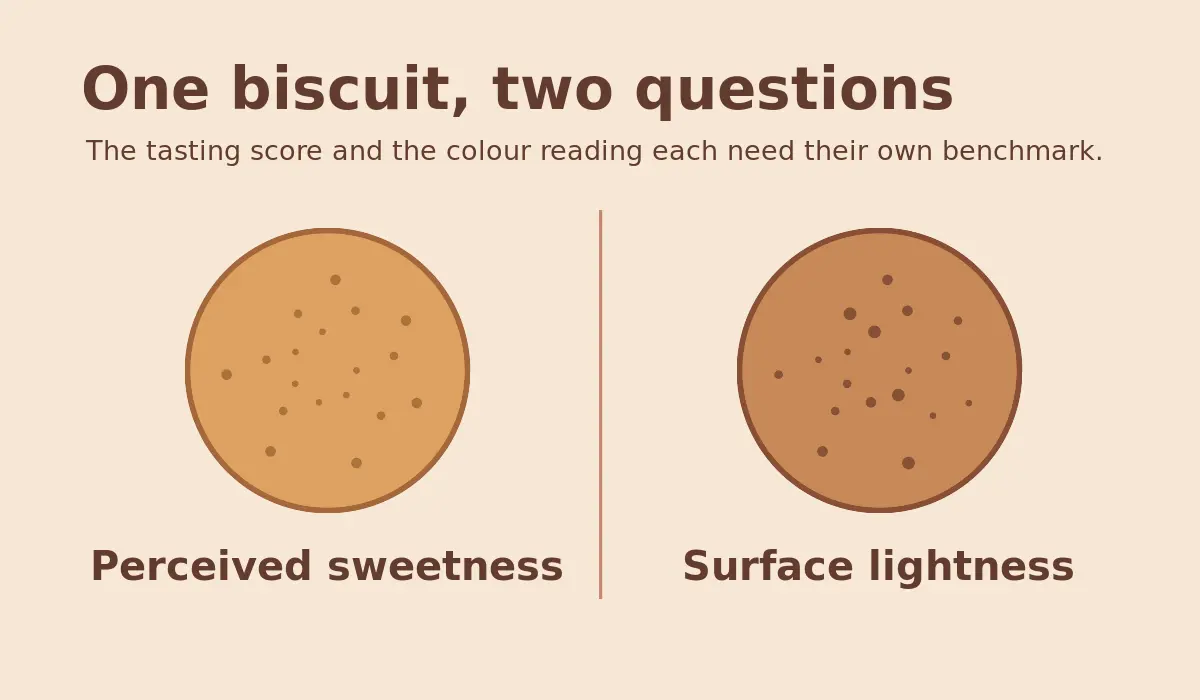
Imagine a brief for a reformulated biscuit. The current biscuit scores 6.0 on a nine-point sweetness-intensity scale. The prototype scores 6.1. Under the same colour measurement the surface goes from a lightness of L* 57 to L* 66, where a higher number is lighter. The two rows describe the same prototype, but they answer different questions about it.
For sweetness, the fictional brief asks tasters how intense the sweetness seems. It could also ask which biscuit they prefer, which is a separate question. For browning, the brief records the lightness of the surface at a stated point after baking. A baker who hopes to preserve a golden appearance has a reason to keep the colour comparison even when the two sweetness scores look close.
Give colour a viewing position
A whole biscuit can have a pale centre and a dark rim. A colour result averaged across the top can move if the measurement includes more rim in one batch than the other. The notes for this example would say whether the number came from the centre, the rim or a defined area across both. The same idea applies to time. In their 2026 whole-grain wheat cookie study, Žilić and colleagues report colour coordinates and show samples baked for three different durations. The photograph panel is easiest to interpret beside that time information. Žilić et al., Figure 1 and colour results.
A project description can bundle the aims
The SLADCORE feasibility report describes its modified sugar in terms of sweetness and similarity to sucrose in sensory and structural characteristics. It also says that the early samples still needed further physicochemical and sensory characterisation. Those categories are useful to a reader because each calls for a different piece of evidence. The cookie paper provides an example of a colour record and covers different ingredients from the historical project. CORDIS, SLADCORE period 1 reporting.
For the fictional biscuit, the brief needs separate decisions on whether 6.0 and 6.1 are close enough given the tasting method and how much surface lightness can vary while still meeting the intended appearance. Leaving room for two answers helps the prototype tell you what changed.